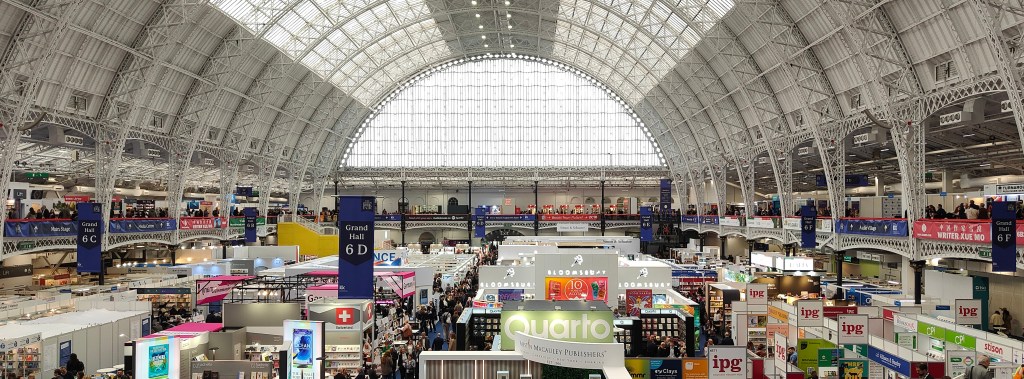
In March I travelled to the London Book Fair (#LBF25) after many years. My last visit was in the mid-2000s when it was banished to the Excel Centre in east London and shared conference facilities on the day with a health and beauty fair. It wasn’t difficult to spot on the DLR who was headed for which event.
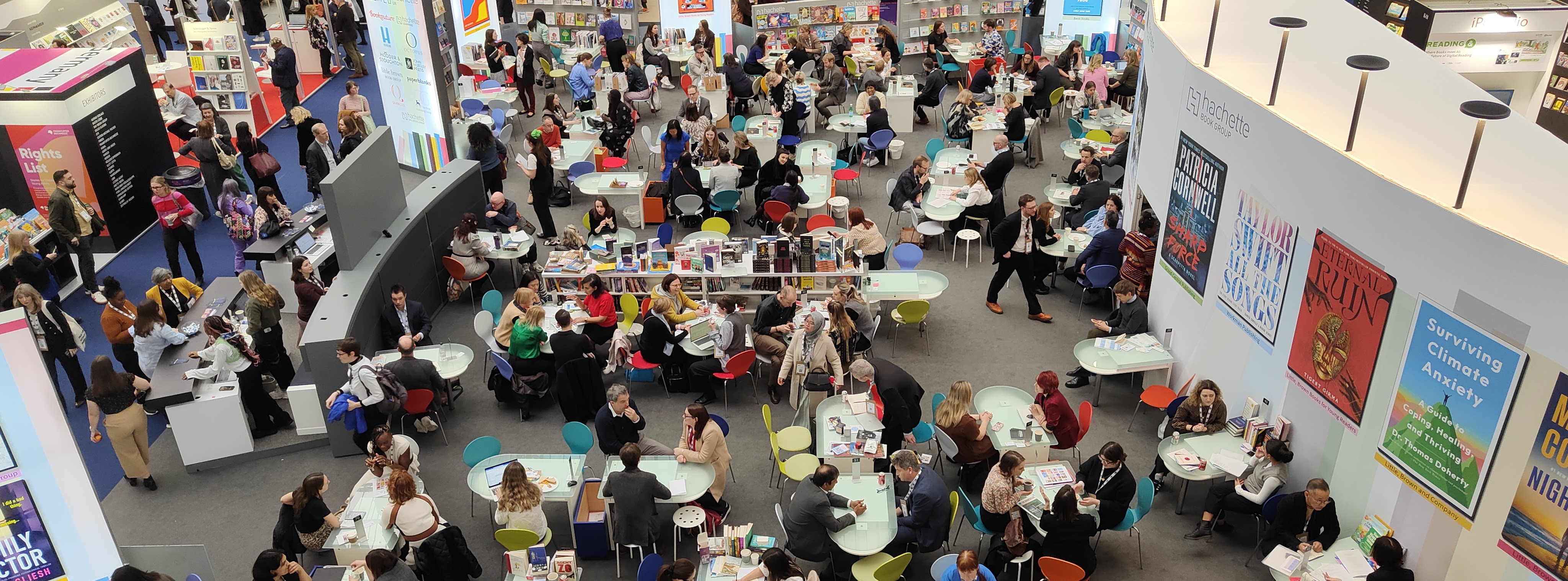
The Fair is back in the historic Olympia London in Kensington. There seemed to be a renewed energy in the fair which saw 30,000 visitors over three days. There was a large publishing technology presence (academic and trade publishing are now unarguably technology businesses) and parts of the Fair were reminiscent of the Online Information Show in its prime before its demise after a long decline in 2014.
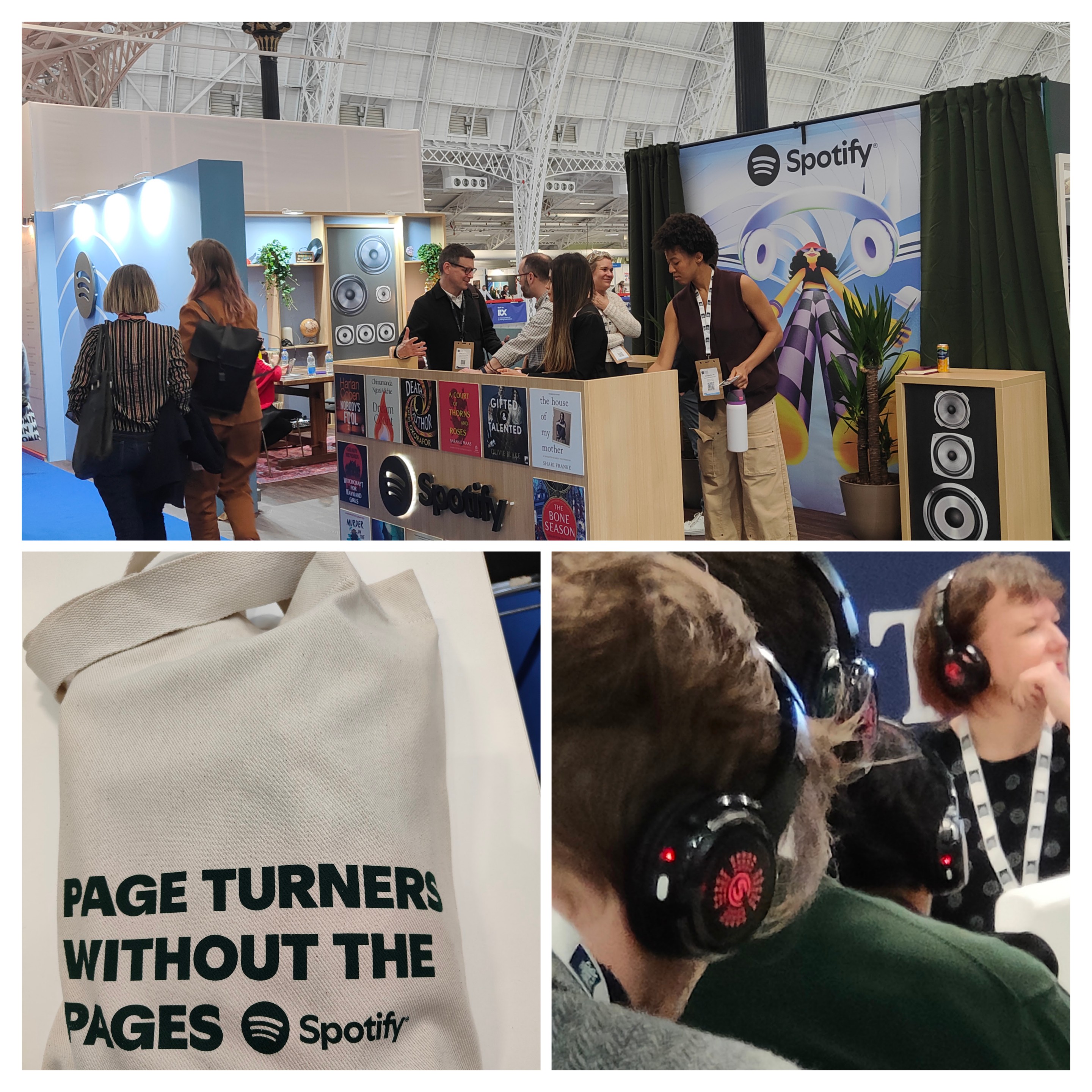
The LBF is subtitled “Defining the future of creative content” (no mention of books.) Spotify had a big presence in the large audiobook area and had the best-quality swag: high quality book bags emblazoned with ‘Page Turners Without The Pages’. It’s unusual to see a brand use a tagline that includes a negative. Amazon ran talks on self-publishing. All the free talks in the Tech Theatre were full houses.
Academic and Professional Publishing Conference
A note to future attendees: there is free tea, coffee, refreshments and lunch provided in the conference area. Do not spend £4 on a coffee on the way in! And with a bit of focus you can recoup a large percentage of your ticket cost with many coffee refills…
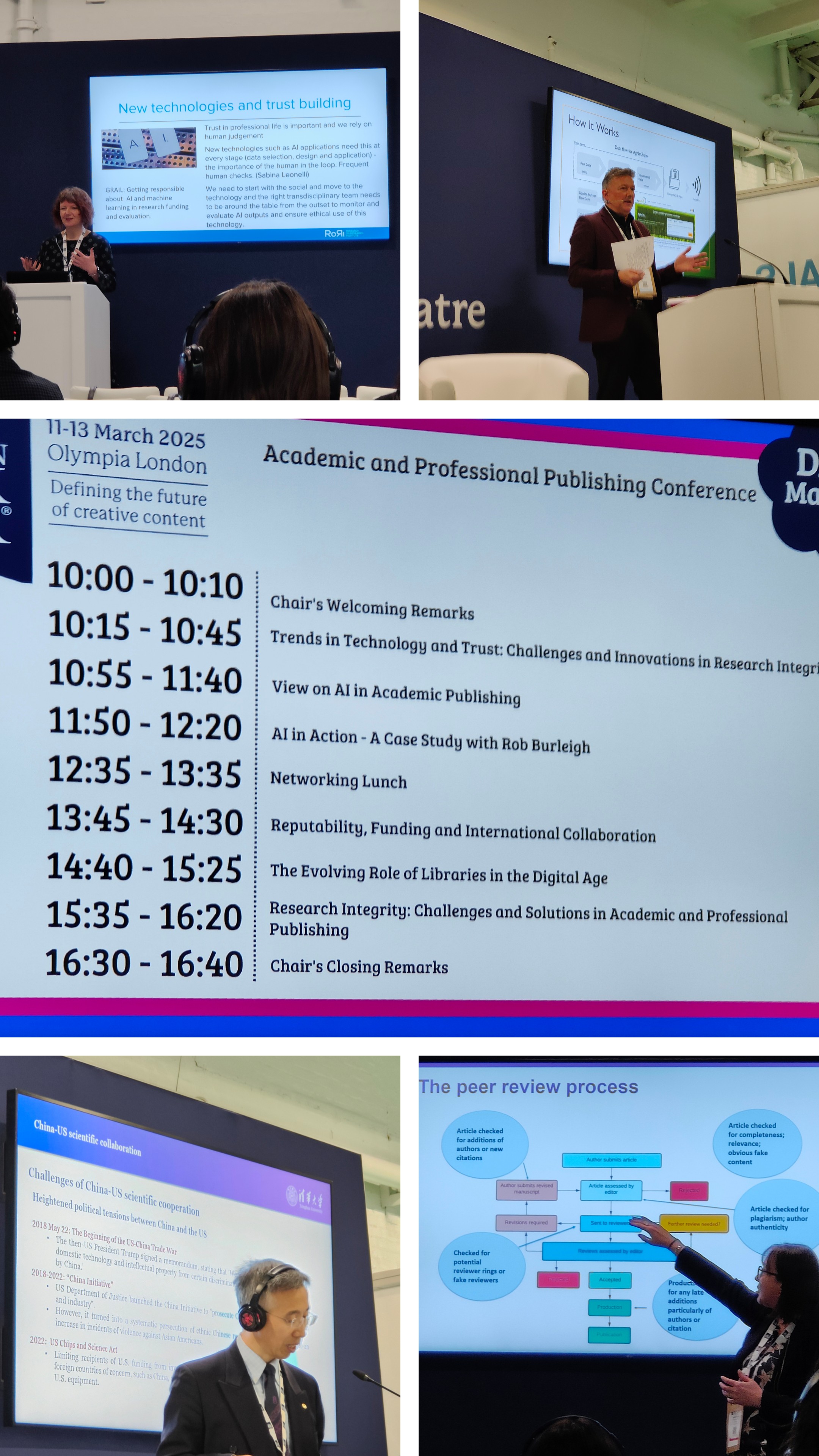
I visited on the middle day, Wednesday, to coincide with the Academic and Professional Publishing conference and for a couple of pre-arranged meetings. The conference opened with a ‘future-focussed’ conversation between Lisa Hinchliffe and Martin Hamilton, chaired by Helen Buckley woods from UCL’s interesting Research on Research Institute (RoRI).
Some notes from their conversation:
- Pay attention to both weak and strong signals when strategizing about the future of academic publishing. e.g. changes in academia, population demographics, investment funding (or divestment), unreliable governments or leaders, customer behaviour.
- We’re in the second big digital disruption, partly but not solely driven by AI. Disruptive cycles are shortening.
- The precarity of employment in academia is leading to a broken social contract where activities that were previously generally agreed to contribute to the social good (e.g. voluntary peer review, editorial board work) are now challenged. Arguably, there is an ‘ecosystem of precarity‘ in academic publishing.
- Today’s publishing systems are not set up to cope with the likely impact of AI on publishing volume with AI-assisted researchers possibly publishing multiple papers per day. Many AI-generated papers will be of a publishable standard (e.g. data papers describing research data). There could be two tracks of papers – AI-generated information and Human-generated narrative.
- There will be huge demographic shifts in the UK and elsewhere in the coming decades in terms of university-age population. New scholars and researchers are being trained and educated by people who may themselves have different values to the previous generation in terms of publishing.
- Academic publishing needs to rebuild trust for the scholarly record: it’s no longer a matter of preserving trust. There is a cost to countering bad actors and to reinforce trust systems. What does a trustworthy industry look like? The industry is taking great risk if it doesn’t act decisively. New organizations will be required to ‘police the borders’ of academic publishing and re-establish trust.
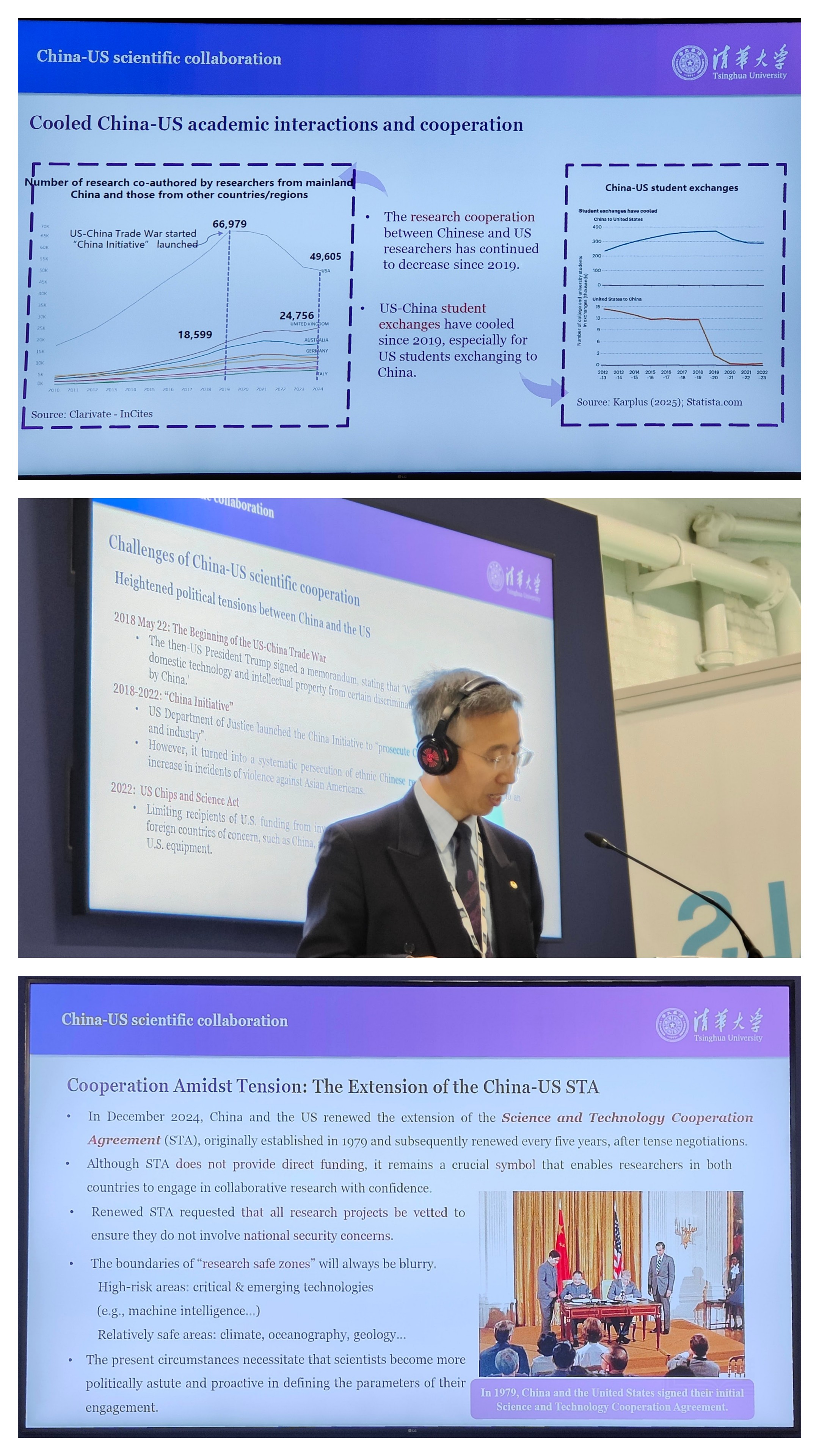
The middle of the day saw a talk on “Reputability, Funding and International Collaboration in China” by Prof. Jianbin Jin, Director of Tsinghua University Library which I covered in a separate LinkedIn post.

It’s always good to see smaller publishers demonstrating agility in terms of their use of new technology. This was certainly the case with Rob Burleigh of Burleigh Dodds Science Publishing demonstrating their RAG-underpinned AI-Generated Reports service on its AgNetZero platform.
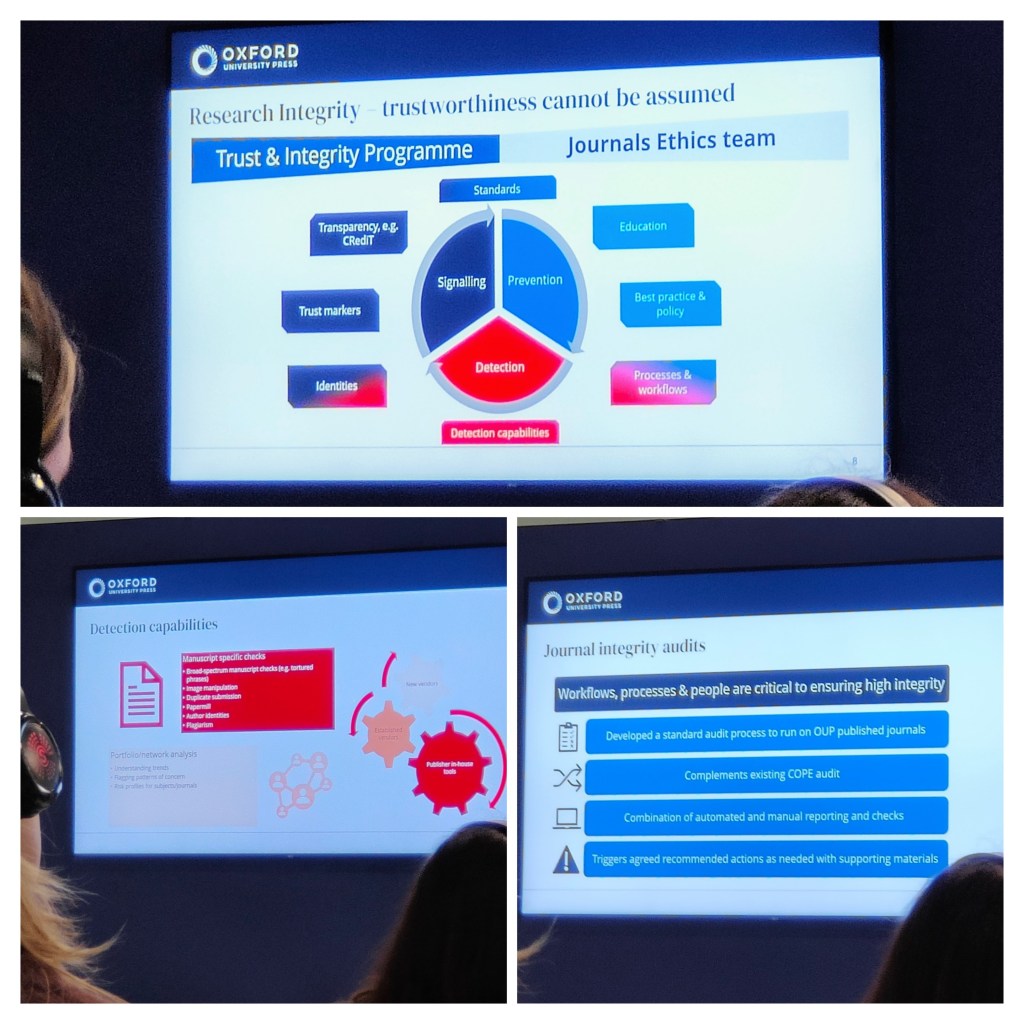
Trust and integrity returned strongly in the final session of the day which included a presentation from Julia McDonnell of Oxford University Press setting out how it is working to ensure both in its journals management and peer review processes.
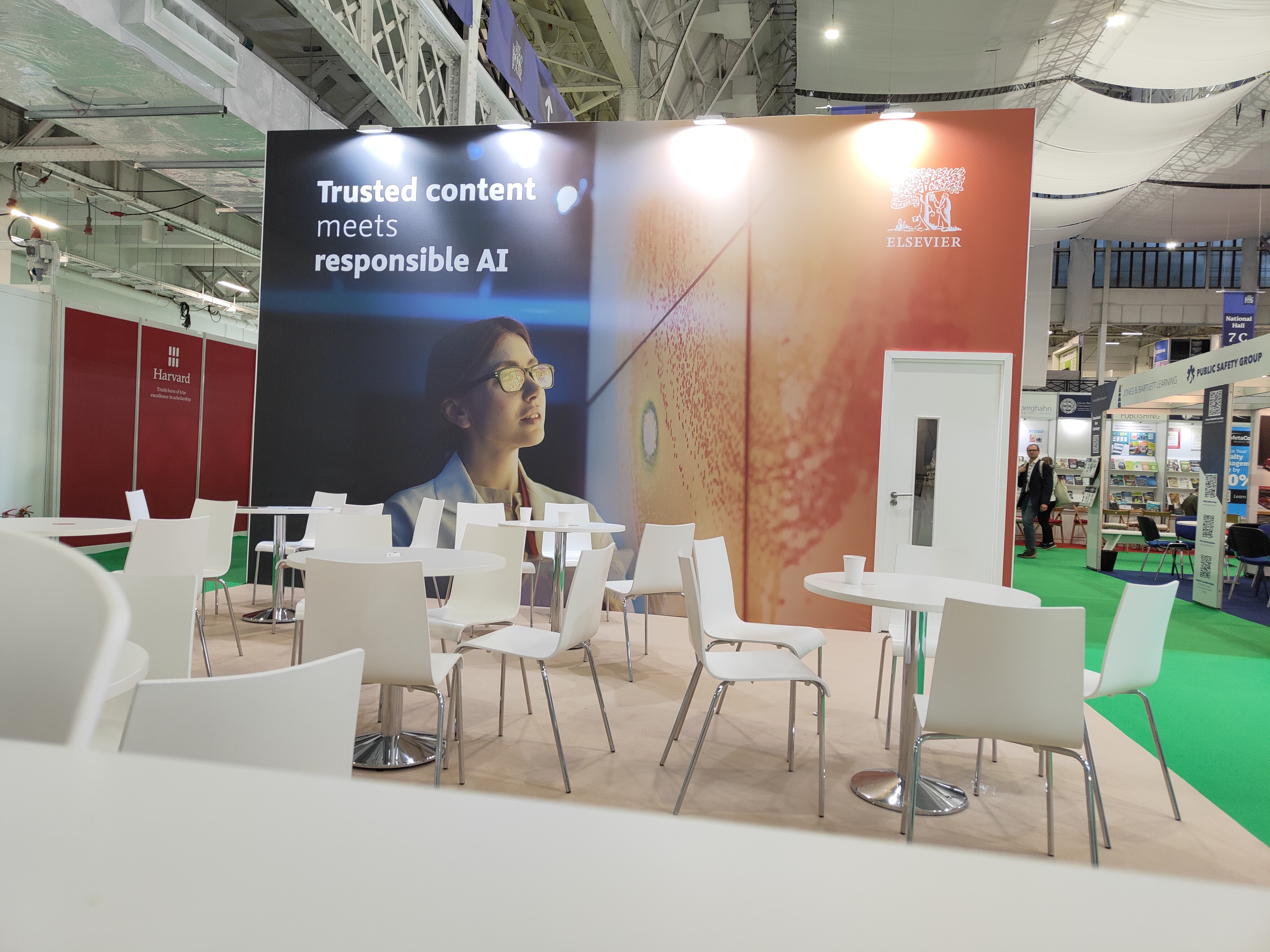
At the end of the day (just after the above photo in a mostly empty Olympia) I met Adrian Bullock from the Oxford International Centre for Publishing. My theory is that most of what look like meetings at publishing events are really people catching up and reminiscing, and this was one of those moments. After university in Ireland, I did the Diploma in Advanced Studies in Publishing at Oxford Brookes in 1994, which Adrian co-led and still teaches on. We talked about another notable figure in publishing at Oxford Brookes, Bob Woodings, who died in December after a long and varied life. Adrian has written a short memorial for Bob on the OICP website.
 richardobeirne.com